Starting a Successful Dates Company in India: Essential Insights
Dates are a beloved and nutritious fruit, enjoyed globally for their sweet taste and health benefits. Predominantly cultivated in tropical regions, particularly in Arabic, dates are unique in many cultures and cuisines. The demand for dates in India is substantial, making it a promising venture for entrepreneurs looking to tap into this lucrative market. Here's what you need to know to start a successful dates company in India.
Understanding the Market Potential
India is a massive market with a population exceeding 1.3 billion people. Despite being a significant producer of dates, local production needs to meet the domestic demand. The country imports over 57,000 metric tons of dates annually, and this number is steadily increasing. Events like Ramadan see a spike in consumption, with over 385,000 tons consumed during this period alone.
Key Varieties of Dates
The Indian market is flooded with dates primarily sourced from Iran, Algeria, Saudi Arabia, and Tunisia. Four main varieties dominate the market:
- Zahedi (Iraq): Popular for its appealing colour, taste, and affordability.
- Mazafati (Iran): Known for its rich, moist texture.
- Burni (Saudi Arabia): Favored for its unique flavour.
- Deglet Nour (Algeria and Tunisia): While delicious, its higher cost limits its demand.
Importing Dates: Step-by-Step Guide
1. Obtain an Importer Exporter Code (IEC): This is essential for trading and is issued by the regional Joint DGFT.
2. Legal Clearance: Dates are classified as 'legal items' for import, meaning no special import license is required.
3. File a Bill of Entry: Include details such as quantity, value, country of origin, and other transaction specifics.
4. Pay Import Duty: The current import duty for dates is 26.85%, which is necessary for clearing the goods through customs.
Storage Solutions for Dates
Proper storage is crucial to maintaining the quality and taste of dates. Here are three effective storage methods:
- Room Temperature: Suitable for semi-dry varieties like Sukkari and Khidri. Store in airtight containers to keep them fresh for a couple of months.
Refrigeration: This method is ideal for storing dates like Medjool and Kholas for up to six months. In sealed containers, maintain a temperature of 4 degrees Celsius.
- Freezing: For long-term storage, freeze dates at -18 degrees Celsius. Proper airtight packaging is essential to protect against moisture and humidity.
Selling Dates in India
Dates are widely used across India, with heightened demand during Ramadan. Key markets include Delhi, Lucknow, West Bengal, Kerala, Srinagar, Mumbai, and Hyderabad. Establishing a solid distribution network in these regions can significantly boost your business.
Conclusion
Starting a date business in India is a promising venture, given the high demand and the country's position as a primary importer. You can establish a successful date company by understanding the market, selecting suitable varieties, and following proper import and storage procedures. Your business is poised for success with India's vast market and growing appetite for dates.
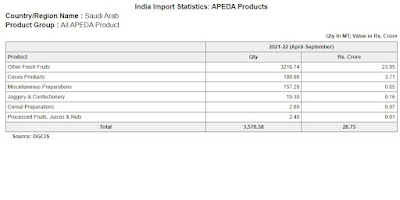
APEDA Report - India's import statistics of Dates from Saudi Arabia
What Is Talbinah (Talbina)? Benefits, Sunnah, Nutrition, Recipe & Complete Guide
By Mohammad Abid Hurzuk
· Published July 5, 2026
· Updated September 2, 2026
Traditional Talbinah is a smooth barley porridge commonly prepared with finely ground barley and water or milk, with dates or honey often added for sweetness.
Quick answer:
Talbinah, also spelled Talbina or Talbeena,
is a traditional barley porridge made primarily from finely ground barley.
It is generally cooked with water or milk and may be served with dates,
honey, nuts or other toppings. Talbinah also has an important place in
Islamic tradition through narrations found in Sahih al-Bukhari and Sahih Muslim.
Modern nutrition research discussed in connection with Talbinah often concerns
barley or barley beta-glucan rather than the traditional dish itself.
Traditional FoodBarley-based porridge
Islamic TraditionReferenced in authentic hadith collections
Practical RecipeSimple stovetop preparation
Evidence-AwareFood claims separated from medical claims
Talbinah is a traditional barley-based porridge prepared
from finely ground barley and cooked with water or milk. The finished food
has a smooth, creamy consistency and can be eaten plain or served with
ingredients such as dates, honey, nuts or seeds.
Talbinah is sometimes written as Talbina,
Talbeena or Talbinah porridge.
These spellings generally refer to the same traditional food rather than
completely different products.
Unlike oatmeal, which is made from oats, traditional Talbinah is associated
with barley. It is also different from a coarse barley
porridge made from intact or cracked barley because Talbinah is commonly
associated with finely ground barley and a smooth texture.
In simple terms:
Talbinah is a smooth barley porridge. The simplest version can be made
with finely ground barley and water, while milk, dates, honey, nuts and
spices can be added according to personal preference.
Talbinah, Talbina or Talbeena: What Is the Correct Spelling?
English-language searches use several transliterations of the Arabic food
name. Common forms include Talbinah,
Talbina and Talbeena.
Search term
Meaning / usage
Talbinah
Common transliteration used for the traditional barley preparation.
Talbina
Another widely used English spelling.
Talbeena
Alternative transliteration encountered in English-language searches.
Talbinah porridge
Descriptive English phrase combining the traditional name with its food form.
Barley porridge
General English description of a porridge made from barley.
Jau ka daliya
A familiar Hindi description for barley porridge; local usage can vary.
What Does Talbinah Mean?
Talbinah is the traditional name used for a soft barley preparation
discussed in Islamic food tradition. In English, it is often explained
simply as barley porridge or, in older descriptions,
barley gruel.
In India and South Asia, people searching for Talbinah may also use terms
such as jau ka daliya, meaning barley porridge.
However, a generic barley porridge and traditional Talbinah are not
necessarily identical recipes.
Search terminology:
Talbinah, Talbina, Talbeena, barley porridge, Talbinah porridge and
jau ka daliya can overlap in search intent, but recipe traditions and
preparation methods may differ.
Is Talbinah a Sunnah Food?
Talbinah has a recognized place in Islamic food tradition. Narrations
attributed to Aisha (RA) describe Talbinah and its
preparation in the context of illness and grief.
This historical and religious context is one of the reasons people
continue to search for terms such as Talbina Sunnah,
Talbinah in Islam, Talbina Hadith and
Sunnah food Talbinah.
Important distinction:
The traditional religious description of Talbinah should be kept separate
from modern medical claims. A hadith describing comfort or traditional
use does not by itself establish that Talbinah cures depression, anxiety,
diabetes, high cholesterol or another medical condition.
What Does the Hadith Say About Talbinah?
Talbinah is mentioned in narrations found in major hadith collections,
including Sahih al-Bukhari and
Sahih Muslim.
The narrations attributed to Aisha describe Talbinah as a food prepared
for a sick person and in circumstances involving grief. This is an
important part of the traditional story of Talbinah and helps explain
why it remains associated with comfort in Islamic culture.
There are three different kinds of information that should not be mixed
together:
Islamic tradition
Hadith and traditional accounts explain the historical and religious
significance of Talbinah.
Food science
Nutrition research can examine barley, fiber, beta-glucan and the
ingredients used in a Talbinah recipe.
Clinical medicine
Medical treatment claims require appropriate human clinical evidence.
A traditional food should not automatically be presented as medicine.
Practical preparation
Recipe methods, cooking times and ingredient ratios can be described
separately from religious and medical evidence.
What Is Talbinah Made Of?
A simple homemade Talbinah can be prepared with only a few ingredients.
There is no single universal recipe, so the nutritional value and texture
depend on the barley flour, liquid, portion size and toppings used.
1. Barley flour
Finely ground barley is the defining ingredient of traditional-style
Talbinah. Finer flour generally produces a smoother porridge.
2. Water or milk
Water produces a lighter preparation, while milk can make the porridge
richer and contributes nutrients such as protein and calcium when
dairy milk is used.
3. Dates
Chopped, mashed or blended dates can provide sweetness and a naturally
rich flavor.
4. Honey
Honey is an optional sweetener. It increases sweetness and carbohydrate
content, so the amount matters when considering the overall recipe.
5. Nuts and seeds
Almonds, walnuts, pistachios, sesame and other seeds can add texture,
fats and additional nutrients.
6. Optional spices
Cinnamon or other preferred spices may be added for flavor, although
they are not required for a basic Talbinah recipe.
What Does Talbinah Taste Like?
Plain Talbinah has a mild grain flavor and a soft, creamy texture.
Barley can provide a lightly nutty or malty taste. Milk generally produces
a richer mouthfeel, while dates and honey make the finished bowl sweeter.
The final taste depends heavily on the type of barley flour, liquid,
cooking time and toppings. A finely milled barley flour cooked slowly
generally produces a smoother result than a coarse barley preparation.
Talbinah Nutrition: What Determines the Nutritional Value?
There is no single nutrition label for homemade Talbinah. A bowl made
from barley flour and water will have a different nutritional profile
from one prepared with full-fat milk, dates, honey and nuts.
Barley is notable for its dietary fiber, including
beta-glucan. Milk can contribute protein, fat and
minerals, while dates and honey add sweetness and carbohydrate.
Nuts can increase energy density and contribute fats and protein.
Ingredient choice
Likely nutritional effect
More barley flour
Increases the overall portion and the amount of carbohydrate
and barley-derived fiber.
Milk instead of water
Usually adds protein, fat and minerals; the exact values depend
on the type of milk.
Dates
Adds sweetness and carbohydrate while contributing the nutrients
naturally present in dates.
Honey
Adds sweetness and carbohydrate.
Nuts and seeds
Can increase calories and add fats, protein and micronutrients.
Water-based recipe
Avoids the nutrients and calories supplied by milk while keeping
the basic barley component.
Packaged-product nutrition:
Never use generic homemade Talbinah nutrition numbers as the nutrition
declaration for a commercial product. A packaged food should use the
nutrition information applicable to its actual formulation and labeling
requirements.
What Does Science Say About Talbinah?
The evidence should be interpreted carefully because research about
Talbinah itself is different from research about
barley or barley beta-glucan.
Talbinah research
A limited body of research has specifically investigated Talbinah or
Talbinah-based preparations. Such studies should be considered on
their own methods, populations and limitations.
Barley research
A much larger nutrition literature concerns barley, dietary fiber and
beta-glucan rather than the complete traditional Talbinah dish.
Traditional evidence
Hadith provide historical and religious context. They should not be
rewritten as modern clinical trial results.
Barley Beta-Glucan and Blood Lipids
Research on barley beta-glucan has examined its relationship with blood
lipid measures, including LDL cholesterol and non-HDL cholesterol.
The effects depend on the amount consumed, the form of beta-glucan,
duration and overall dietary pattern.
Therefore, evidence concerning barley beta-glucan should not be converted
into a promise that a particular Talbinah recipe will lower cholesterol.
Barley, Fiber and Fullness
Barley contributes dietary fiber and can form part of a filling meal.
However, satiety responses vary according to the food, portion size,
fiber amount, total meal composition and individual circumstances.
What We Still Cannot Conclude
Evidence boundary:
Talbinah should not be described as a cure for depression.
Talbinah should not be described as a cure for diabetes.
Talbinah should not be described as a guaranteed weight-loss food.
Barley research should not automatically be presented as Talbinah research.
Traditional religious statements should not be rewritten as clinical evidence.
Potential Dietary Advantages of Talbinah
When prepared as a barley-based food, Talbinah can provide several
practical nutritional advantages. These are best understood as properties
of the food and its ingredients rather than as medical treatments.
1. A practical way to eat barley
Talbinah provides a simple porridge format for incorporating barley
into a meal.
2. Dietary fiber
Barley contains dietary fiber, including beta-glucan. The amount
depends on the barley ingredient and serving size.
3. Flexible preparation
Talbinah can be prepared with water or milk and adapted with dates,
honey, nuts and other toppings.
4. Soft texture
The cooked porridge format produces a soft food that many people
may find convenient to eat, subject to individual dietary needs.
5. Customizable energy density
Milk, dates and nuts can make a richer bowl, while water and fewer
toppings can produce a lighter preparation.
6. Traditional food heritage
Talbinah connects practical food preparation with a long-standing
Islamic culinary tradition.
Does Talbinah Help With Depression or Sadness?
Talbinah is frequently associated online with emotional comfort because
of the traditional narrations describing its use in circumstances involving
illness and grief. There has also been scientific interest in whether
Talbinah may influence mood-related outcomes.
However, the evidence should be interpreted cautiously. A traditional food
and a potential research finding are not the same thing as an established
medical treatment for depression.
Traditional Islamic perspective
The hadith literature provides the historical reason Talbinah became
associated with comfort during illness and grief.
Modern research perspective
Published research has investigated Talbinah in relation to mood and
depressive symptoms, but the amount of available clinical evidence is
limited. Study size, design and population matter when interpreting such
findings.
Important:
Talbinah should not replace professional assessment or treatment for
depression, anxiety or another mental-health condition. Anyone experiencing
persistent or severe symptoms should seek appropriate professional care.
Talbinah for Weight Gain
Talbinah does not automatically cause weight gain. Weight change depends
primarily on overall energy intake, dietary pattern and individual
circumstances.
A calorie-dense Talbinah bowl prepared with milk, dates, nuts and other
energy-containing ingredients can provide more calories than a simple
water-based bowl. For that reason, a richer Talbinah recipe may fit into
a person's broader plan for increasing energy intake.
How to make a more energy-dense Talbinah
Use milk instead of water if suitable for you.
Add dates for sweetness and additional carbohydrate.
Add nuts or seeds for additional energy and fats.
Adjust portion size according to individual requirements.
Key point:
A higher-calorie Talbinah recipe may help increase energy intake, but the
overall diet determines whether body weight actually changes.
Talbinah for Weight Management
Barley can contribute dietary fiber to a meal, and fiber-containing foods
may contribute to fullness for some people. However, Talbinah is not
automatically a weight-loss food.
A Talbinah bowl containing large amounts of honey, dates, nuts and full-fat
milk can be considerably more energy-dense than a simple barley-and-water
preparation.
For a lighter Talbinah bowl
Choose a portion appropriate to your dietary needs.
Use water or a suitable lower-energy liquid if desired.
Keep added sweeteners modest.
Consider the quantity of dates and nuts.
Look at the entire meal rather than one ingredient in isolation.
Can People With Diabetes Eat Talbinah?
Talbinah contains carbohydrate because its main ingredient is barley.
The total carbohydrate and energy content can increase further when dates,
honey or other sweet ingredients are added.
Therefore, people managing blood glucose should consider the complete
recipe, serving size and their individual dietary plan rather than assuming
that a barley-based food is automatically suitable or unsuitable.
Avoid unsupported claims:
Talbinah should not be marketed as a treatment for diabetes or as a food
that automatically controls blood sugar.
Talbinah With Dates: A Traditional-Style Pairing
Dates are a natural pairing for barley porridge because they add sweetness,
texture and a rich fruit flavor. They can be chopped, mashed or blended
into the finished Talbinah.
Ajwa dates
Soft, dark dates with a distinctive flavor. They can be used as a
topping or blended into a traditional-style bowl.
Medjool dates
Large and soft with a caramel-like sweetness, making them suitable
when a richer topping is desired.
Sukkari dates
Naturally sweet and soft, suitable for people who prefer a sweeter
date-based preparation.
Safawi and Mazafati dates
Both can be paired with Talbinah according to availability, texture
and preferred sweetness.
How many dates should you add?
There is no single required quantity. Two or three chopped dates can provide
noticeable sweetness to a small bowl, but the appropriate amount depends
on the recipe, serving size and dietary needs.
Talbinah During Ramadan
Talbinah can be prepared as a simple breakfast-style porridge during
Ramadan, including as part of a Suhoor or
Iftar meal. Dates are a natural pairing for people who
enjoy the traditional combination.
Talbinah for Suhoor
For Suhoor, some people may prefer a more substantial bowl prepared with
milk and a balanced combination of barley, dates and nuts. Portion size
should reflect individual nutritional needs.
Talbinah for Iftar
A smaller, softer preparation can also be served as part of an Iftar meal.
Dates can be served alongside or incorporated into the porridge.
Simple Ramadan Talbinah idea
Finely ground barley flour
Milk or water
Chopped dates
Optional nuts
Optional small amount of honey
Optional cinnamon
Ramadan nutrition reminder:
Talbinah is one food within a complete meal pattern. Hydration, overall
food quality, portion size and individual dietary requirements remain
important during fasting.
How to Make Traditional Talbinah at Home
Simple Traditional-Style Talbinah Recipe
About 10–15 minutes
This is a practical traditional-style preparation. Recipe quantities can
be adjusted according to the desired thickness and serving size.
Ingredients
3 tablespoons finely ground barley flour
2 cups milk or water
2–3 chopped dates, optional
1 teaspoon honey, optional
Almonds, walnuts or other toppings, optional
A small pinch of cinnamon, optional
Basic preparation
Place the milk or water in a saucepan.
Warm gently over low to medium heat.
Gradually whisk in the barley flour.
Continue stirring to reduce lumps.
Cook until the mixture becomes smooth and creamy.
Add dates or honey according to taste.
Serve warm with optional nuts or seeds.
Texture tip:
Start with a slightly thinner mixture. Talbinah thickens as it cooks
and continues to thicken somewhat as it cools. Adjust the liquid
according to the type and fineness of barley flour.
How Long Does Talbinah Take to Cook?
A small stovetop batch commonly takes around 10–15 minutes,
although cooking time varies with the quantity, heat level, flour fineness
and desired consistency.
How Do You Make Talbinah Without Milk?
Simply use water instead of milk. The result is lighter in flavor and
texture. A suitable plant-based liquid can also be used according to
dietary preference.
Talbinah Recipe Variations
Date Talbinah
Blend or finely chop soft dates into cooked barley porridge.
Honey Talbinah
Add a small amount of honey after cooking for additional sweetness.
Nutty Talbinah
Finish with almonds, walnuts, pistachios or seeds.
Vegan Talbinah
Use water or a suitable plant-based milk instead of dairy milk.
Light Talbinah
Use water or a suitable lighter liquid and keep added sweeteners
modest.
Rich Breakfast Talbinah
Use milk with dates and nuts for a more energy-dense breakfast.
Does Talbinah Contain Gluten?
Yes. Ordinary barley naturally contains gluten.
Traditional barley-based Talbinah should therefore not be treated as
gluten-free.
People with celiac disease or another medical reason to follow a strict
gluten-free diet should avoid ordinary barley-based Talbinah unless their
qualified healthcare professional provides appropriate guidance.
What about milk, dates and honey?
Milk, dates and honey do not change the fact that barley itself is a
gluten-containing grain. Other ingredients may introduce additional
dietary considerations such as dairy intolerance, allergies or changes
in carbohydrate and calorie content.
Packaged products:
Always check the actual ingredient list, allergen declaration, nutrition
panel, storage instructions and applicable food-label information on the
product package.
Talbinah vs Other Breakfast Foods
Talbinah is sometimes confused with oatmeal, dalia, barley water or
generic barley porridge. The following comparison helps distinguish them.
Food
Main grain
Typical texture
Gluten consideration
Traditional Talbinah identity
Talbinah
Barley
Smooth porridge
Contains gluten
Yes
Oatmeal
Oats
Creamy or chewy
Depends on oats and contamination/certification
No
Dalia
Often broken wheat
Usually coarser
Usually contains gluten when wheat-based
No
Barley porridge
Barley
Variable
Contains gluten
Not necessarily
Barley water
Barley-infused liquid
Liquid
Barley is a gluten-containing grain
No
Talbinah vs Oatmeal
Talbinah is barley-based, whereas oatmeal is oat-based. Their textures,
grain composition and nutritional profiles can therefore differ.
Talbinah vs Dalia
Dalia is a broad term used in South Asia for porridge made from grains
such as broken wheat. Talbinah specifically refers to the traditional
barley-based preparation.
Talbinah vs Barley Water
Talbinah is a spoonable porridge, while barley water is a liquid
preparation. They should not be treated as the same food.
How to Choose Talbinah Powder
Ready-made Talbinah powder or barley porridge mixes can make preparation
more convenient. Before purchasing, examine the actual package rather
than relying only on promotional claims.
Ingredient list:
Check what the product actually contains.
Barley content:
Determine the primary grain and whether additional ingredients are used.
Added sugar:
Check whether sugar, sweeteners or other sweet ingredients have been added.
Nutrition information:
Use the product's own declared nutrition values.
Allergen information:
Review the applicable allergen declaration.
Gluten information:
Remember that ordinary barley itself contains gluten.
Net quantity:
Compare pack sizes when comparing prices.
Manufacturing and expiry information:
Check the actual package before use.
Storage instructions:
Follow the manufacturer's instructions after opening.
Food-label compliance:
For Indian products, review the applicable food-label and FSSAI
information on the actual package.
HURZUK Premium Talbinah Barley Porridge Mix
HURZUK • 250g Retail Pack
Barley-based Talbinah for convenient home preparation
HURZUK Talbinah is presented as a convenient barley-based porridge
mix for home preparation. It can be prepared with milk or water and
served with dates, honey, nuts or other preferred toppings.
The product's actual ingredient list, nutrition information, allergens,
storage instructions and other mandatory information should always be
taken from the physical product package.
Talbinah can be included in a varied diet for people who tolerate its
ingredients. However, individual dietary needs differ.
Adults
Can choose portions and ingredients according to their dietary pattern.
Children
Suitability depends on age, texture, allergies and individual needs.
Older adults
The soft texture can be convenient, but recipes should be adapted to
individual nutritional and swallowing requirements.
People fasting
Talbinah can be incorporated into Suhoor or Iftar according to
individual dietary preferences and requirements.
Dietary caution:
Barley contains gluten. Dairy, nuts and other optional ingredients can
introduce additional allergens or dietary considerations.
Frequently Asked Questions About Talbinah
What is Talbinah?
Talbinah is a traditional barley porridge made primarily from finely
ground barley flour and cooked with water or milk.
What is Talbina made from?
A basic Talbina recipe uses barley flour and water or milk. Dates, honey,
nuts and spices are optional additions.
What is Talbinah called in English?
Talbinah is commonly described in English as barley porridge or barley
gruel.
What is Talbinah called in Hindi?
Barley porridge may be described as jau ka daliya
(जौ का दलिया), although local terminology can vary.
Is Talbinah a Sunnah food?
Talbinah has an important place in Islamic tradition and is mentioned
in narrations found in Sahih al-Bukhari and Sahih Muslim.
What Hadith mentions Talbinah?
Narrations attributed to Aisha (RA) discuss Talbinah in connection with
illness and grief. See the referenced Sahih al-Bukhari and Sahih Muslim
sources in the references section below.
Is Talbinah the same as oatmeal?
No. Talbinah is traditionally barley-based, while oatmeal is made from oats.
Does Talbinah contain gluten?
Yes. Ordinary barley contains gluten, so traditional barley-based Talbinah
is not suitable for a strict gluten-free diet.
Can I make Talbinah without milk?
Yes. Water can be used instead of milk, and a suitable plant-based liquid
may also be used according to preference.
Can I add dates to Talbinah?
Yes. Dates can be chopped, mashed or blended into Talbinah and are a
popular natural sweetener for the porridge.
Can I add honey to Talbinah?
Yes. Honey can be added according to taste. It increases the sweetness
and carbohydrate content of the recipe.
Can Talbinah be eaten every day?
Talbinah can be included in a varied diet for people who tolerate its
ingredients. Frequency and portion size should match individual nutritional
requirements and overall dietary variety.
Is Talbinah good for weight gain?
A richer Talbinah recipe made with milk, dates and nuts can provide more
calories, but weight gain depends on total energy intake and the overall diet.
Is Talbinah good for weight loss?
Talbinah can fit into a weight-management diet, but it is not a guaranteed
weight-loss food. Portion size and added ingredients affect its energy content.
Can people with diabetes eat Talbinah?
Talbinah contains carbohydrate because it is made from barley. The amount
can increase when dates or honey are added. People managing blood glucose
should consider the full recipe, portion and individual dietary guidance.
Does Talbinah help with depression?
Talbinah has a traditional association with comfort during illness and
grief, and scientific research has explored possible mood-related effects.
However, available evidence does not justify presenting Talbinah as a
replacement for professional treatment of depression.
Can children eat Talbinah?
Suitability depends on the child's age, allergies, dietary needs and the
texture of the preparation. Parents should consider the ingredients and
individual circumstances.
Can elderly people eat Talbinah?
The soft texture can be convenient for some older adults, but the recipe
should be adapted to individual nutrition, swallowing and medical needs.
How long does homemade Talbinah take to cook?
A small stovetop batch commonly takes around 10–15 minutes, depending on
the quantity, flour fineness and desired consistency.
What is the difference between Talbinah and barley water?
Talbinah is a thick barley porridge, while barley water is a liquid
preparation. They are different food preparations.
What is the difference between Talbinah and dalia?
Dalia is a general term for grain porridge and is often prepared from
broken wheat in South Asia. Talbinah specifically refers to the
traditional barley-based preparation.
Sources and References
This guide separates Islamic textual references, modern scientific
research and practical food information. Research concerning barley or
beta-glucan should not automatically be interpreted as clinical evidence
for every Talbinah recipe.
Mohammad Abid Hurzuk publishes food, date-fruit and
traditional-food guides through
Dates.Business
.
His publishing focus includes dates, traditional foods, ingredient
knowledge, practical preparation and food trade.
Our Editorial Approach
This Talbinah guide distinguishes between three important evidence
categories: Islamic textual sources, modern scientific research and
practical food preparation. Claims about barley are not automatically
presented as claims about Talbinah, and traditional religious references
are not presented as modern medical treatment evidence.
Editorial note:
This article is intended for general food information, cultural education
and consumer information. It is not medical advice and does not replace
advice from a qualified healthcare professional.
TalbinahTalbinaTalbeenaBarley PorridgeTalbinah RecipeTalbina SunnahTalbinah HadithTalbinah NutritionTalbinah With DatesBarley Beta-GlucanRamadan FoodSuhoor FoodBarley FlourJau Ka Daliya
Dates.Business is a Mumbai-based bulk and wholesale dates supplier serving buyers across India, with dates sourcing, varieties, suppliers, markets, prices and global trade insights.